 EN
EN

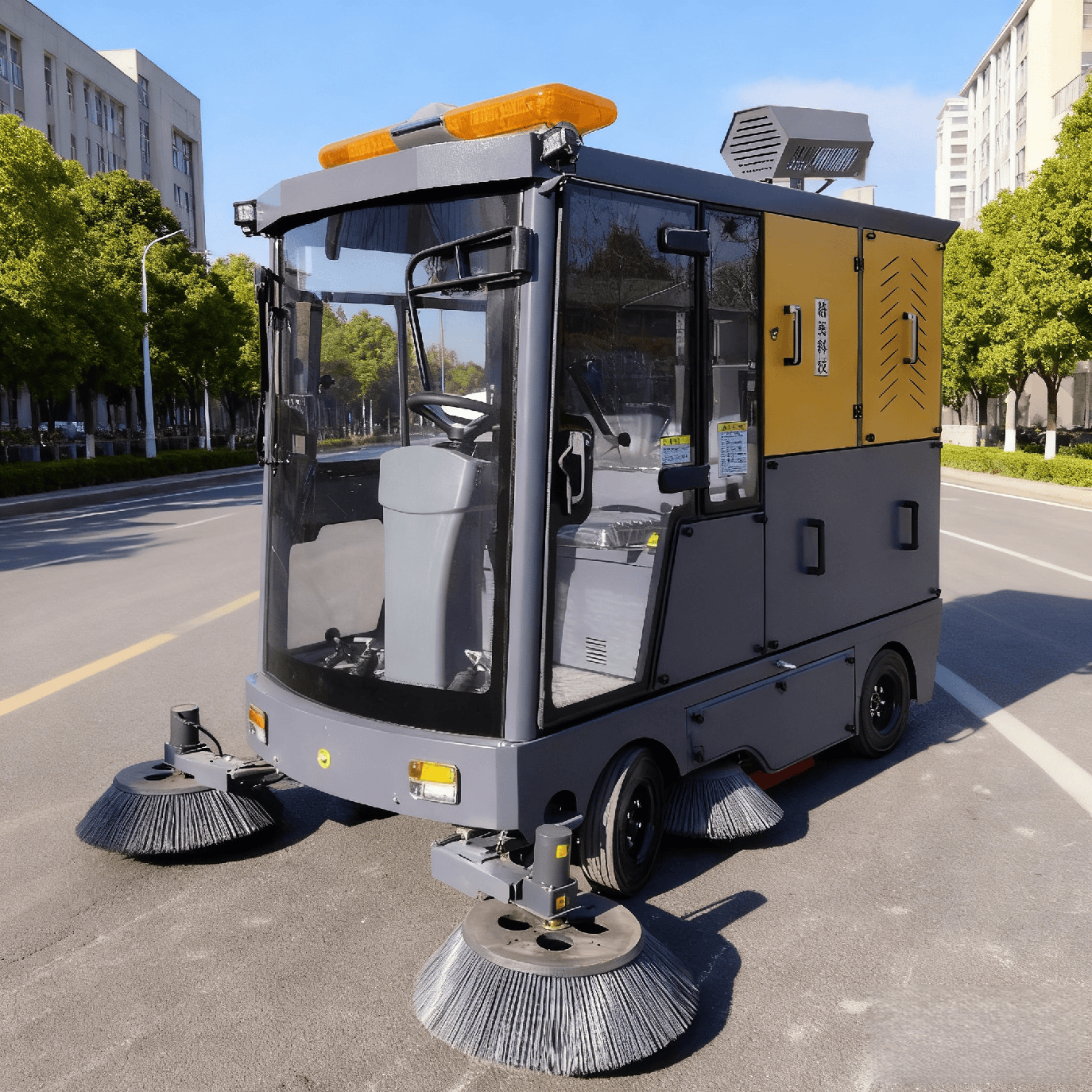
Urban Road Requirements: Defining Performance Baselines for Street Sweeper Procurement
Curb-to-curb coverage, sub-3m lane navigation, and PM2.5 suppression as non-negotiable street sweeper capabilities
When cities go shopping for new street sweepers, there are really three must-have features they look for first. The machine needs to clean all the way from one curb to the other so nobody has to chase after spots later. It should handle lanes narrower than 3 meters because many old neighborhoods just don't have space for bigger equipment. And most importantly, it must actually reduce those tiny PM2.5 particles down below what the World Health Organization considers safe levels in the air we breathe. These specs tackle some serious city problems. Think about those narrow backstreets where even turning around is tough sometimes, or how kids getting sick from breathing polluted air has become such a big concern lately. Plus, with fewer workers available for street cleaning jobs, cities want machines that can do the whole job in one pass without stopping. Most local governments no longer care so much about things like how big the dirt bin is on the truck. Studies show that almost four out of five problems with street cleaning come down to either poor maneuverability around corners or dust getting loose while the sweeper works.
Case study: Copenhagen’s 2023 fleet renewal—how noise (<68 dB(A)) and PM10 (<0.02 mg/m³) mandates reshaped street sweeper selection
What happened when Copenhagen updated its fleet in 2023 shows just how much environmental standards can change what cities buy. The city was looking at serious fines from the EU if it didn't meet those strict noise and PM10 requirements. So they set their own rules pretty tight: operations had to stay below 68 dB(A) and exhaust emissions needed to drop under 0.02 mg per cubic meter. These specs actually knocked out around 60 percent of the regular equipment proposals. They went with electric regenerative air sweepers instead. Those machines hit 64 dB(A) even during those early morning cleanups, which is pretty quiet considering. And within just half a year, there was a noticeable 41% drop in particulate matter on the streets. The results made one thing clear: following regulations doesn't mean sacrificing good cleaning performance in crowded city areas. It also means saying goodbye to those old mechanical broom systems that just weren't cutting it anymore.
Total Cost of Ownership: Optimizing Budgets for Large-Scale Street Sweeper Procurement
Municipalities must prioritize total cost of ownership (TCO)—not just upfront purchase price—when procuring street sweepers at scale. TCO encompasses energy use, maintenance labor, parts replacement, and residual value depreciation over a typical 10–12 year service life.
Electric regenerative air street sweepers cut energy TCO by 37% vs. mechanical broom models (ICLEI 2024 benchmark)
Electric regenerative air systems reduce long-term energy costs through:
- Kinetic energy recapture during braking and deceleration
- Lower kWh/mile consumption, validated across 17 European municipal fleets in ICLEI’s 2024 benchmark study
- Elimination of diesel exhaust fluid (DEF), associated filtration systems, and related maintenance
Tiered rollout strategy: Pilot 12 telematics-equipped street sweepers before scaling to 100+ units
A phased implementation mitigates financial and operational risk while generating evidence-based ROI:
-
Pilot phase: Deploy 12 telematics-enabled units to monitor:
- Real-time battery efficiency and route-specific energy draw
- Predictive maintenance triggers (e.g., brush wear thresholds, filter saturation alerts)
-
Data-driven scaling: Leverage pilot analytics to:
- Standardize configurations for bulk orders—reducing customization overhead
- Negotiate volume discounts exceeding 15%, supported by verified performance data
- Train operators using actual route maps and workload profiles
This approach prevents costly fleet-wide configuration errors and ensures capital is allocated where performance gains are empirically demonstrated.
Future-Proof Technology: Electric Powertrains, IoT Integration, and Assisted Operation in Street Sweepers
Why L3-Assisted Path-Following—Not Full Autonomy—Is the Pragmatic Standard for Urban Street Sweeper Deployment
L3 assisted path following remains the practical choice for city deployments right now, not going all the way to Level 4 plus autonomy. This system lets vehicles navigate accurately along already mapped paths, but still keeps humans in the loop when things get unexpected on the streets. Think about pedestrians suddenly crossing, new signs popping up overnight, or those construction cones blocking lanes. Full autonomy would need major changes to existing infrastructure and special permissions from regulators. But with L3, operators need only half the training time they'd require for higher levels according to a recent study in the International Municipal Equipment Journal from 2024. Cities buying these systems in bulk report real benefits too. Operators experience less fatigue doing those same old curb line jobs day after day, and there are no extra headaches about operational risks or legal liabilities that come with experimental autonomous tech.
OTA-Updatable Firmware and Modular Battery/Filter Systems: Mitigating Regulatory and Parts Obsolescence Risk
Street sweepers equipped with OTA firmware updates can keep up with changing emissions standards like the new Euro 7 and China VIe regulations without needing expensive hardware recalls. This capability actually adds about six to eight extra years to the life of municipal fleets. The modular design of battery packs means cities don't have to throw away whole powertrains when just a few cells degrade. Similarly, HEPA filters that can be swapped out in the field save money because crews only replace what's worn out or clogged, not entire filtration systems. According to a 2023 ICLEI report, this approach cuts down on disposal costs and replacement expenses by around 31%. When paired with IoT monitoring systems, these machines get smarter over time. They start predicting which parts might fail based on actual usage patterns. During busy cleaning periods, this foresight reduces unexpected breakdowns by nearly 60%, making sure cities stay compliant with regulations even as they operate under tight budget constraints for several years at a time.
FAQ
-
What are the key requirements for street sweeper procurement?
Curb-to-curb coverage, sub-3m lane navigation, and PM2.5 suppression are crucial capabilities. -
How did Copenhagen enhance its fleet in 2023?
By adopting electric regenerative air sweepers that meet stringent noise and PM10 requirements. -
Why is Total Cost of Ownership important in procurement?
It includes energy use, maintenance labor, parts replacement, and residual value depreciation. -
What is the advantage of L3-Assisted Path-Following?
It offers practical navigation while keeping human operators involved, reducing training time. -
How do OTA updates extend street sweeper lifespan?
OTA firmware updates align with changing emission standards, preventing expensive recalls.