 EN
EN

Understanding Large-Area Cleaning Demands in Modern Factories
Key Challenges: Contaminant Type, Surface Complexity, and Operational Uptime Constraints
Industrial plants run into all sorts of cleaning problems that regular janitorial services just can't handle. Think about the thick machine oil buildup, tiny metal bits scattered around, and those stubborn chemical deposits left behind after manufacturing runs. These messes need special cleaning techniques completely different from what works in office buildings or retail stores. The factory floor itself presents challenges too. Grated walkways collect debris between the slats, machinery has countless nooks and crannies where grime builds up, and those tall ceiling structures create hard-to-reach areas for standard equipment. Timing matters big time as well. According to recent industry data from last year, nearly three quarters of factories are losing hundreds of thousands each year because cleaning gets scheduled at inconvenient times or takes too long to complete. Good industrial washing systems have to do several things at once: get rid of tough dirt without harming expensive equipment, maneuver through complicated plant layouts, and finish the job fast enough to fit into those brief 2 to 4 hour maintenance periods when production stops.
Why Off-the-Shelf Industrial Washer Solutions Often Underperform in High-Volume Production Environments
Factory cleaning systems built for generic use tend to fall flat when put to work in real manufacturing environments. Most off-the-shelf models simply don't deliver enough water flow (usually needing around 10-15 gallons per minute) to properly clean large areas like aircraft hangars. And those fixed spray nozzles? They can't handle the messiness of mixed assembly lines where sensitive electronics sit next to greasy machines. Then there's the whole issue with automated guided vehicles running around the floor. Cleaning teams have to coordinate their schedules down to the minute to prevent accidents and keep production moving. Production facilities aren't like offices or stores. They need heavy duty washers that let operators adjust pressure settings between 500 and 3000 psi, come with interchangeable parts, and actually talk to the factory's scheduling software. Plants stuck using standard equipment end up spending 40% more time on cleaning tasks and using 15% extra water than necessary, according to recent research in water management journals. That kind of waste adds up fast in any operation processing thousands of units daily.
Matching Industrial Washer Types to Specific Large-Area Applications
Selecting the optimal industrial washer requires aligning equipment capabilities with distinct cleaning zones. High-traffic factory areas demand fundamentally different solutions than fixed machinery assets.
Floor & Walkway Cleaning: Rotary Scrubber-Washers vs. Auto-Scrubber-Dryers for Wide-Area Coverage
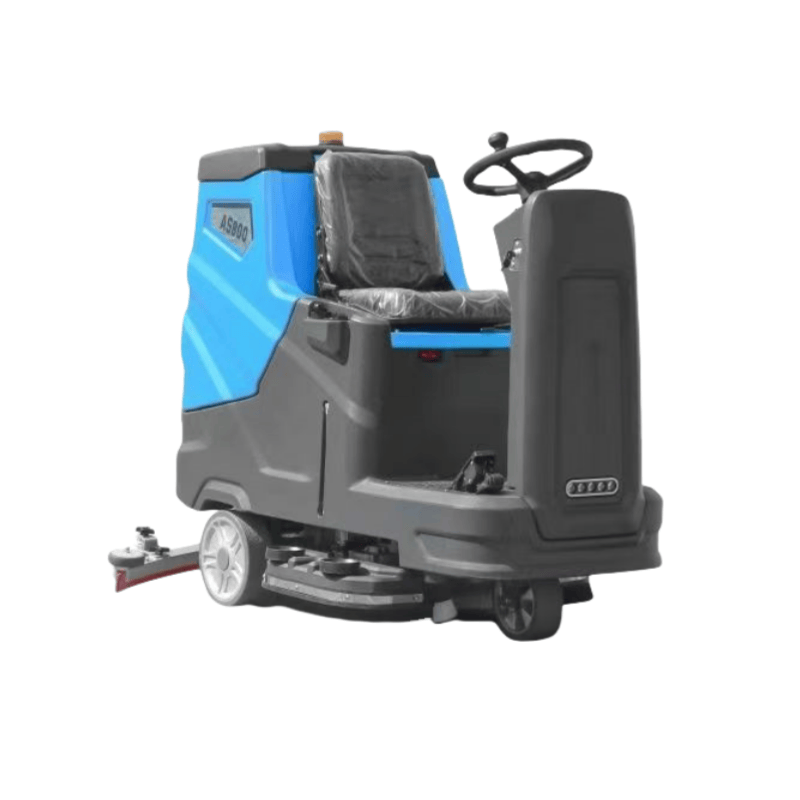
Rotary scrubber washers are really good at getting rid of stubborn grease and dirt stuck in large concrete floors. They work their magic through spinning brushes and powerful water jets that hit around 1500 pounds per square inch or more for thorough cleaning results. On the other hand, auto scrubber dryers focus on making things faster and keeping operations running smoothly in places that need cleaned every day. These machines do three things at once washing, sucking up the dirty water, and drying the surface all while cutting down how long floors stay wet and unusable. When looking at big spaces over 50 thousand square feet, companies often switch to conveyor driven scrubber dryer systems. Such setups can slash labor expenses by about forty percent compared to old fashioned manual cleaning methods. Plus, when timed right with employee shifts, these systems knock out cleaning tasks up to two thirds quicker than traditional approaches.
Machinery & Fixed Assets: Stationary or Robotic Industrial Washer Systems with Targeted Spray Zones
For those dealing with regular cleaning tasks involving similar parts, stationary cabinet washers work great. These machines save both water and chemicals thanks to their programmable spray systems, and they deliver pretty much the same results every time. When it comes to tricky shapes near conveyor belts or along assembly lines though, nothing beats robotic mobile units. Their flexible arms can get into tight spots that fixed systems just cant reach. Manufacturing plants running multiple product lines tend to find modular tunnel washers most useful. The adjustable spray areas let them tackle different kinds of grime head on coolant leftovers from CNC tools or stubborn flux buildup on printed circuit boards without messing up other operations going on nearby.
Critical Industrial Washer Specifications for Factory-Scale Performance
Pressure, Flow, and Temperature: Balancing Decontamination Efficacy with Material Safety
Industrial washers really depend on three main specs to work properly: pressure measured in pounds per square inch (PSI), how much water flows through per minute (GPM), and what temperature the water is set to. When we talk about high pressure ranges from around 2500 up to over 4000 PSI, this stuff gets rid of stubborn dirt and grime stuck to parts. But there's a catch too. If someone forgets about safety measures, those same pressures can actually harm delicate surfaces such as epoxy finishes or thin metal sheets. Moving on to flow rates, anything past 4 gallons per minute definitely speeds things up during rinsing stages. However, unless adjusted carefully based on how porous different materials are and the actual shape of the parts being cleaned, water usage jumps anywhere between thirty to fifty percent higher than needed. Temperature settings create probably the biggest dilemma though. Hot water at approximately 180 degrees Fahrenheit breaks down oils roughly three times quicker compared to regular cold water setups. The downside? Many plastic parts just can't handle that kind of heat without getting damaged. Smart companies tackle these issues by developing specific cleaning procedures tailored for particular types of dirt. For instance, getting rid of tough grease buildup on heavy steel equipment might need something aggressive like 3000 PSI combined with hot water around 180 degrees. Meanwhile, when dealing with sensitive electronic components, most experts recommend going lower than 1500 PSI using room temperature water mixed with special detergents that don't foam much and won't corrode anything.
| Specification | Performance Impact | Safety Thresholds |
|---|---|---|
| Pressure (PSI) | Removes bonded contaminants | <2,000 PSI for epoxy coatings and thin metals |
| Flow Rate (GPM) | Reduces cycle time | +0.5 GPM per 100 sq ft of active surface area |
| Temperature (°F) | Dissolves hydrocarbons and biofilms | <140°F for common thermoplastics and elastomers |
Throughput Engineering: Sizing Conveyor and Tunnel Industrial Washers by Line Speed and Part Density
Getting the most out of industrial washers means looking at how much stuff goes through them compared to what's actually happening on the production floor. When we talk about line speed, which is basically how fast things move along in feet per minute, that tells us what kind of tunnel length we need. For example, if a system handles around 50 pallets every hour while moving at 15 feet per minute, then the tunnel needs to be about 45 feet long just to keep those 3 minute cleaning cycles going smoothly. What happens when parts are packed really close together? Well, there's something called shadowing where certain areas don't get cleaned properly because water can't reach them. Studies show as much as 22% of surfaces might miss out on proper washing unless special angled or moving nozzles are used instead of regular ones. Smart factories avoid these kinds of problems by thinking ahead about potential slowdown spots before they become actual issues.
- Matching GPM to total part surface area (e.g., 6 GPM per auto chassis or 12 GPM per turbine blade set)
- Implementing variable-frequency drives that adjust conveyor speed during peak loads or changeovers
- Using robotic arms with targeted spray zones for irregular geometries and variable batch sizes
Undersized systems create 15–25% throughput gaps that cascade into line stoppages; oversized units waste an average of $18,000 yearly in unused utilities, per data compiled by the National Association of Manufacturers’ Energy Efficiency Working Group.
FAQ
Q1: What are the common challenges in factory cleaning?
A: Common challenges include dealing with thick machine oils, metal shavings, and chemical residues that regular cleaning methods can't handle.
Q2: Why do off-the-shelf industrial washers often underperform?
A: They usually lack the necessary water flow and adaptability to handle diverse factory environments and production schedules.
Q3: How can factories select the right industrial washer?
A: By aligning washer capabilities with specific cleaning zones and factory needs, considering pressure, flow, and temperature requirements.
Q4: What specifications are crucial for industrial washer performance?
A: Key specs include pressure, flow rate, and temperature to ensure effective cleaning without damaging materials.