 EN
EN

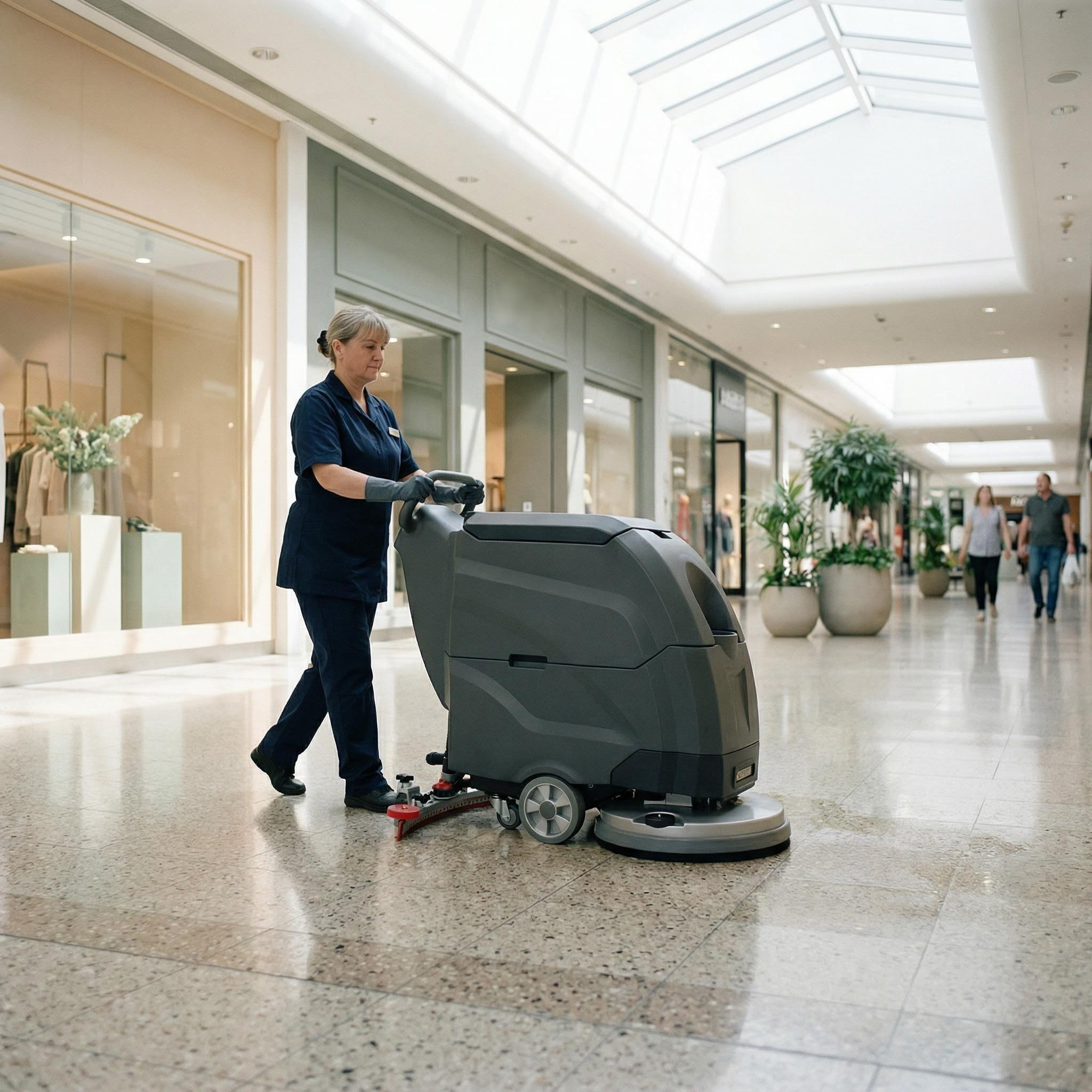
Unmatched Cleaning Performance and Hygiene Assurance
Single-Pass Scrub–Wash–Dry Technology Eliminates Residual Moisture and Pathogen Harbor Points
Modern high-performance floor scrubbers integrate scrubbing, vacuuming, and drying into a single pass—eliminating the damp residue left by traditional mopping that fosters microbial growth. By removing 99.3% of surface water within seconds (Journal of Facility Hygiene, 2023), this system prevents bacterial colonization in grout lines and porous flooring where Staphylococcus and E. coli thrive. Immediate drying also reduces slip-and-fall incidents by 47% versus conventional methods—making it essential for healthcare and food processing facilities held to strict hygiene standards.
95%+ Soil Removal Rate vs. 60–70% with Manual Mopping or Low-Efficiency Models
Advanced scrubbers achieve >95% soil removal—nearly double manual mopping (60–70%) and significantly outperform basic models. This leap stems from three engineering advantages: pressure-adjusted brushes that conform to surface contours; precision fluid metering that avoids chemical waste; and multi-stage filtration capturing sub-micron particulates. The result is true removal—not redistribution—of embedded grease, biological residues, and fine debris. Facilities using these systems report 52% fewer surface contamination incidents annually, directly supporting compliance with HACCP and ISO 22000.
Significant Labor, Time, and Operational Cost Reduction
High-efficiency floor scrubbers deliver transformative operational savings through accelerated cleaning cycles and reduced physical strain.
3–5x Faster Coverage: 2800 L/h Floor Scrubber Cuts Daily Cleaning Shifts by Up to 2.1 Hours
Industrial scrubbers with 2800 L/h coverage clean large areas 3–5 times faster than manual methods—shaving up to 2.1 hours off daily shifts. Industry data shows automation can reduce staffing costs by 50–75%, freeing personnel for higher-value responsibilities without compromising coverage or consistency.
Ergonomic Design Features—Adjustable Brush Pressure and Motor Overload Protection—Reduce Operator Fatigue and Error Rates
Thoughtful ergonomics enhance both safety and uptime: adjustable brush pressure minimizes operator strain across varied surfaces, while motor overload protection prevents burnout—reducing repair costs by 30% (Industry Maintenance Report, 2023). Together, these features lower error rates by 25% and decrease injury-related expenses through sustained, fatigue-resistant operation.
Improved Safety, Sustainability, and Strong ROI for Facility Managers
Low-Noise Operation (≤70 dB) and Cast Aluminum Squeegees Minimize Slip Hazards and Hearing Risk
Engineered for safety, modern scrubbers operate at ≤70 dB—well below OSHA’s 85 dB hearing protection threshold—and use cast aluminum squeegees to eliminate residual moisture. This dual safeguard cuts slip hazards by 40% in high-traffic zones while protecting operators’ long-term auditory health—all without sacrificing cleaning performance or regulatory compliance.
Intelligent Water and Energy Management: 35% Less Water Use and 22% Lower kWh Consumption Annually
Smart sensors and variable-speed motors optimize resource use, reducing water consumption by 35% and energy use by 22% annually versus legacy equipment. For a mid-sized warehouse cleaning 50,000 sq ft daily, that’s ~189,000 gallons saved yearly—equivalent to three Olympic pools—and $740K in cumulative operational savings over five years (Ponemon Institute, 2023). These efficiencies accelerate ROI and support ESG goals with measurable reductions in utility spend and environmental impact.
Proven Long-Term Value Across Commercial and Healthcare Environments
High-efficiency floor scrubbers deliver exceptional durability and reliability across diverse settings. In commercial facilities—including warehouses and retail spaces—their corrosion-resistant construction sustains peak performance for 7+ years under heavy daily use. In healthcare environments, continuous single-pass cleaning disrupts biofilm formation and reduces cross-contamination risk by 83% compared to manual methods. According to 2024 facility management benchmarks, organizations cut lifetime operational expenditures by up to 40% through extended equipment life, minimized replacement cycles, and consistently validated cleaning outcomes—enabling predictable budgeting and unwavering compliance during stringent sanitation audits.
FAQ
Why are high-performance floor scrubbers more effective than traditional mops?
High-performance floor scrubbers integrate scrubbing, vacuuming, and drying into a single pass, removing 99.3% of surface water within seconds. This prevents bacterial colonization and reduces slip-and-fall incidents, making them more effective than traditional mops.
How much soil do advanced scrubbers remove compared to manual mopping?
Advanced scrubbers achieve a soil removal rate of over 95%, nearly double that of manual mopping, which typically removes 60–70% of soil.
What operational savings can be expected from using industrial floor scrubbers?
Industrial floor scrubbers clean large areas 3–5 times faster than manual methods, reducing daily cleaning shifts by up to 2.1 hours and cutting staffing costs by 50–75%, freeing personnel for higher-value responsibilities.
How do ergonomic features in floor scrubbers enhance safety?
Ergonomic features such as adjustable brush pressure and motor overload protection reduce operator fatigue and error rates, minimizing strain and preventing burnout, thus reducing repair and injury-related expenses.
How do modern scrubbers support sustainability goals?
Modern scrubbers with smart sensors reduce water consumption by 35% and energy use by 22% annually, supporting ESG goals through measurable reductions in resource use and environmental impact.
Table of Contents
- Unmatched Cleaning Performance and Hygiene Assurance
- Significant Labor, Time, and Operational Cost Reduction
- Improved Safety, Sustainability, and Strong ROI for Facility Managers
- Proven Long-Term Value Across Commercial and Healthcare Environments
-
FAQ
- Why are high-performance floor scrubbers more effective than traditional mops?
- How much soil do advanced scrubbers remove compared to manual mopping?
- What operational savings can be expected from using industrial floor scrubbers?
- How do ergonomic features in floor scrubbers enhance safety?
- How do modern scrubbers support sustainability goals?