 EN
EN

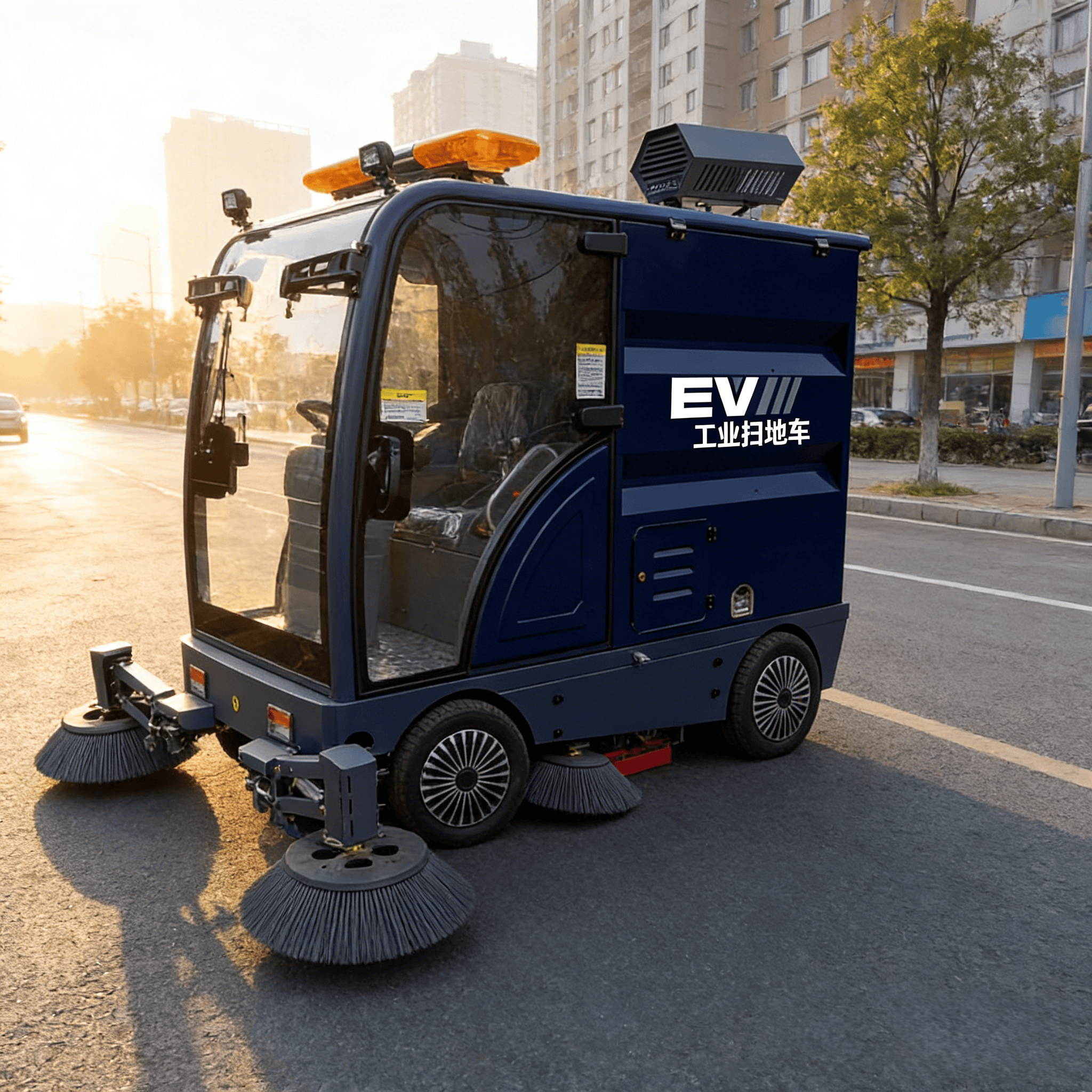
Core Industrial Cleaning Equipment Categories
Floor Sweepers, Scrubbers, and Combo Units for Large-Scale Facility Maintenance
Large industrial facilities require purpose-built cleaning equipment to maintain expansive, high-traffic floors efficiently. Floor sweepers remove dry debris—dust, metal shavings, pallet fragments—across warehouses and loading docks. Scrubbers use chemical solutions and rotating brushes to lift sticky residues, oil films, and biological contaminants from production floors and food processing areas. Combo units integrate both functions into a single platform, enabling seamless transitions between dry sweeping and wet scrubbing—ideal for distribution centers and large retail spaces where floor conditions change rapidly.
Automated models can clean up to 150,000 sq ft per hour, cutting labor costs by 60% versus manual methods. Key performance variables include lithium-ion battery life (6–8 hours), adjustable brush pressure (up to 800 PSI for heavy grease), and recovery tank capacity (50–100 gallons) to support uninterrupted operation.
| Equipment Type | Primary Function | Optimal Application Area |
|---|---|---|
| Sweepers | Dry debris removal | Warehouses, loading docks |
| Scrubbers | Wet surface cleaning | Production floors, food processing |
| Combo Units | Dual dry/wet cleaning | Large retail spaces, distribution centers |
High-Pressure Washers and Central Vacuum Systems for Heavy-Duty Grime Control
When confronting industrial-grade buildup—grease, cured concrete slurry, or petroleum-based residues—high-pressure washers deliver targeted cleaning power at 2,000–4,000 PSI. Hot-water variants (140–200°F) significantly enhance hydrocarbon solubility, making them indispensable in automotive repair bays and food manufacturing. Central vacuum systems offer facility-wide, continuous suction through a network of wall-mounted inlets, eliminating the need for portable units and reducing clutter and storage demands. With HEPA-grade filtration capturing 99.97% of particles at 0.3 microns, they’re essential in pharmaceutical cleanrooms and electronics assembly where airborne particulates threaten product integrity.
Operational considerations include water consumption (2–8 GPM), noise output (<85 dB for OSHA compliance), and certified particulate separation—especially critical in combustible dust environments governed by NFPA 652. Unlike consumer-grade tools, industrial vacuums and pressure washers sustain consistent performance across full-shift operation and extended hose runs (up to 100 feet) without suction loss or pressure drop.
Key Selection Criteria for Industrial Cleaning Equipment
Matching Equipment Capabilities to Facility Size, Soil Load, and Layout Constraints
Selecting the right equipment hinges on precise alignment between machine specifications and real-world facility conditions. In warehouses exceeding 100,000 sq ft, ride-on scrubbers achieve 40% faster coverage than walk-behind units—validated by third-party facility efficiency benchmarks. Conversely, narrow-aisle manufacturing plants (under 6 ft wide) demand compact, maneuverable walk-behind scrubbers to avoid collisions with racking and machinery.
Soil load intensity further narrows options: food processing lines with persistent grease require ≥2,000 PSI hot-water pressure washers, while electronics labs managing fine metallic dust rely on central vacuums with true HEPA filtration—not just “HEPA-like” filters. Always conduct a layout audit before procurement; mismatched equipment reduces effective cleaning coverage by up to 30%, increasing rework and labor strain.
Evaluating Total Cost of Ownership: Ride-On vs. Walk-Behind Units and Maintenance Realities
Upfront price is only one component of long-term value. A rigorous total cost of ownership (TCO) analysis must account for labor efficiency, energy use, maintenance frequency, training, and expected service life.
| Factor | Ride-On Units | Walk-Behind Units |
|---|---|---|
| Initial Investment | $18k–$35k | $5k–$15k |
| Labor Efficiency | Cleans 60k sq ft/hr | Cleans 25k sq ft/hr |
| Maintenance Costs | 15–20% annual TCO | 8–12% annual TCO |
| Use Case Fit | Large open spaces | Confined areas |
Ride-on units deliver superior productivity but carry higher maintenance burdens—primarily due to complex drivetrains and hydraulic systems—increasing annual upkeep costs by roughly 35% over walk-behind equivalents. In contrast, walk-behind models yield stronger ROI in facilities under 50,000 sq ft but may contribute to operator fatigue over prolonged shifts. For accurate 5-year projections, include energy consumption (kWh/hour), consumable replacement cycles (brushes, filters, batteries), and OSHA-compliant operator training expenses.
Compliance-Driven Cleaning Equipment Decisions
OSHA, EPA, and NFPA Standards Impacting Cleaning Equipment Procurement and Use
Regulatory compliance isn’t optional—it’s foundational to safe, insurable, and legally defensible operations. OSHA requires documented training programs for operators of high-pressure washers, particularly to mitigate injury risks from kickback forces that exceed 10,000 PSI in malfunction scenarios. For chemical applications, EPA Safer Choice certification verifies that cleaning agents meet strict human health and environmental toxicity thresholds—a requirement when wastewater drains into municipal systems.
NFPA 70E and NFPA 70 govern electrical safety in hazardous locations, mandating intrinsically safe designs for battery-powered scrubbers and vacuums used near flammable vapors or combustible dust. Non-compliant equipment in such zones poses ignition risks and violates NFPA 652 requirements. Willful violations attracted median OSHA penalties of $156,000 per incident in 2023. Beyond legal exposure, facilities using certified equipment report 12–18% annual reductions in general liability insurance premiums—proof that regulatory diligence translates directly into risk mitigation and cost savings. Before procurement, verify manufacturer documentation against current editions of CFR 1910 (OSHA), 40 CFR Parts 260–273 (EPA), and NFPA 70E.
Surface-Specific and Hazard-Adapted Cleaning Solutions
Industrial surfaces vary widely—from polished stainless steel and epoxy-coated concrete to porous masonry and abrasive-treated flooring—and each responds differently to cleaning methods. Solvent-based cleaners effectively dissolve organic soils but require ventilation controls and are increasingly restricted by local wastewater ordinances. Phosphate-free, biodegradable alternatives now meet EPA Safer Choice criteria without sacrificing efficacy, supporting both environmental compliance and worker safety.
In hazardous environments—including Class II, Division 1 combustible dust zones—ATEX- or UL-certified equipment is non-negotiable. These units feature non-sparking motors, static-dissipative components, and explosion-proof enclosures engineered to eliminate ignition sources during operation. Mechanical alternatives like controlled abrasive blasting safely strip thick coatings from durable substrates without chemical exposure, extending surface life while avoiding VOC emissions.
Ultimately, matching cleaning technology to material compatibility and site-specific hazards ensures contaminant removal remains effective, repeatable, and aligned with OSHA, NFPA, and EPA mandates—without compromising asset longevity or personnel safety.
FAQ
What industrial cleaning equipment is best for large facilities? Combo units that integrate both dry sweeping and wet scrubbing functions are ideal for large facilities since they can handle different floor conditions efficiently.
Why are lithium-ion batteries important in industrial sweepers and scrubbers? Lithium-ion batteries offer longer operational time (6-8 hours) which supports uninterrupted cleaning and reduces the need for frequent recharging.
What should I consider when selecting industrial cleaning equipment? Considerations should include the size of the facility, intensity of the soil load, and any layout constraints that might affect equipment use.
What are the maintenance cost differences between ride-on and walk-behind units? Ride-on units have higher maintenance costs due to complex drivetrains and hydraulic systems, which can increase annual upkeep costs by about 35% compared to walk-behind units.
Why is regulatory compliance important in industrial cleaning? Compliance ensures safe operations and reduces legal risks, resulting in lower insurance premiums and adherence to OSHA, EPA, and NFPA guidelines.