 EN
EN

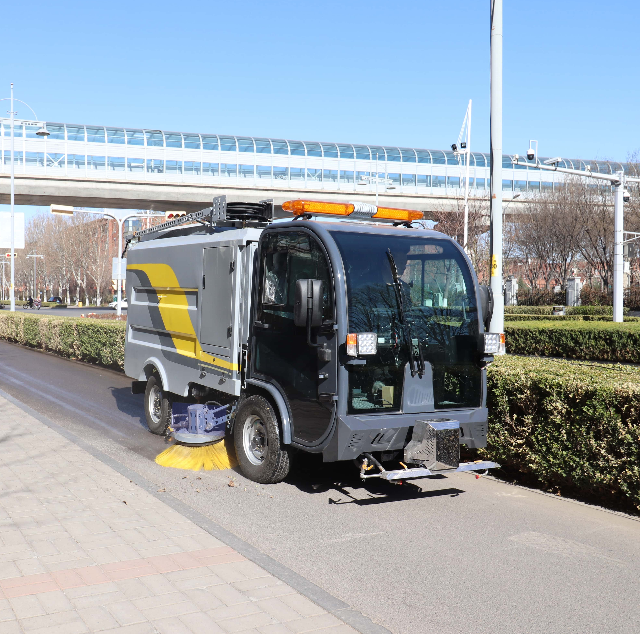
Match Street Sweeper Type to Urban Debris and Pavement Conditions
Analyze debris composition by road type and traffic volume (e.g., fine dust on concrete vs. gravel/leaf litter on asphalt)
Urban debris profiles vary dramatically by location: arterial roads with 20k+ daily vehicles accumulate fine dust particles (<0.5mm) on concrete surfaces, while residential asphalt streets collect gravel and organic matter like leaf litter. Industrial zones generate construction debris averaging 3–5cm fragments, whereas cobblestone corridors trap sediments in crevices. Higher traffic volumes correlate with 42% greater microplastic accumulation (EPA 2023), necessitating specialized filtration. Matching sweeper mechanisms to these conditions prevents inefficiencies—for example, smooth concrete requires sealed systems to contain fine particulates, while cracked asphalt demands adaptive brush pressure.
Compare core street sweeper technologies: mechanical broom, regenerative air, and vacuum—pros, cons, and ideal use cases
Selecting optimal street sweeper technology requires evaluating operational trade-offs:
| Technology | Key Advantages | Limitations | Ideal Deployment |
|---|---|---|---|
| Mechanical Broom | - Handles large debris (≥3cm) effectively - 30% lower upfront cost |
- Limited PM2.5 capture - Higher brush wear |
Construction zones, gravel-heavy roads |
| Regenerative Air | - 92% PM10 capture rate (ISO 22869) - Closed-loop dust containment |
- 17% higher energy consumption - Reduced coarse debris capacity |
Urban centers with air quality mandates |
| Vacuum Systems | - Superior crevice cleaning - Wet/dry operational flexibility |
- Hopper fills faster with bulk debris - Noise levels exceed 85dB |
Historic districts, leaf-prone residential areas |
For mixed urban debris (e.g., dust with intermittent litter), hybrid vacuum-broom systems achieve 23% higher coverage efficiency. Prioritize regenerative air units near schools and hospitals where particulate control matters most, while mechanical brooms excel in port facilities with heavy aggregate.
Prioritize Real-World Performance Metrics Over Spec Sheets
Key operational KPIs: PM10 capture rate (per ISO 22869), fuel efficiency per km² cleaned, and curb-to-curb turning radius
Focus on three critical performance indicators when evaluating urban street sweepers. First, PM10 capture rates certified per ISO 22869 standards directly impact air quality compliance—models achieving ≥95% capture significantly reduce respirable particles in high-traffic zones. Second, measure fuel efficiency per cleaned square kilometer—not gallons per hour. Units consuming ≤4 liters/km² prove cost-effective in daily operations. Finally, prioritize ≤8m curb-to-curb turning radius. This enables navigation around tight corners and parked vehicles where 78% of debris accumulates (2024 urban sanitation study). These KPIs consistently outperform catalog specs in predicting actual municipal functionality.
Why wet/dry adaptability and onboard dust suppression matter more than nominal hopper capacity in dense urban environments
Urban environments demand operational flexibility over theoretical capacity. While manufacturers emphasize hopper volume, integrated dust suppression systems cut PM10 emissions by 63% during sweeping (Environmental Tech Journal, 2023), reducing complaints near sensitive locations. Wet/dry adaptability allows seamless transitions between leaf-covered autumn streets and post-rain grit removal without equipment swaps. Units that dynamically adjust suction power handle unpredictable debris mixtures more effectively than oversized hoppers. Compact designs with these features outmaneuver larger models along congested bike lanes and narrow alleys—where container overflow typically occurs. Prioritizing these capabilities minimizes service disruptions in city centers.
Evaluate Total Cost of Ownership and Regulatory Compliance
Balancing upfront cost with lifecycle factors: Tier 4 Final emissions compliance, battery-electric readiness, and low-emission zone compatibility
Urban sanitation teams must evaluate street sweeper investments through total cost of ownership (TCO), not just purchase price. While mechanical broom sweepers may have lower upfront costs ($120k–$180k), regenerative air models with Tier 4 Final engines reduce particulate matter by 90% (EPA 2024) and avoid $15k–$40k annual emissions penalties in low-emission zones (LEZs). Key TCO components include:
- Operational expenses: Fuel efficiency (diesel vs. electric), filter replacements, and labor hours per km²
- Regulatory risks: Non-compliance fines in LEZs ($7k+/incident) and retrofitting costs for future emission standards
- Infrastructure: Charging stations for battery-electric readiness versus diesel refueling logistics
Prioritizing Tier 4 Final compliance and LEZ compatibility prevents costly operational interruptions. For example, cities like Bristol and Amsterdam now impose daily access fees up to $125 for non-compliant sweepers. A lifecycle analysis by a leading municipal equipment provider showed that despite 25% higher initial investment, compliant sweepers achieved 18% lower TCO over 7 years through reduced penalties and fuel savings.
Validate Selection Through Municipal Case Evidence and Field Testing
Before finalizing your street sweeper investment, validate performance claims through real-world municipal case studies and pilot testing. Request documented evidence of debris removal efficiency (e.g., PM10 capture rates exceeding 90% in comparable urban settings) and operational cost savings from similar-sized cities. Pilot programs provide critical insights: a 2023 study showed 40% of municipalities discovered unexpected maintenance needs during trial deployments that weren’t apparent in spec sheets. Prioritize vendors who facilitate on-site testing of key features like curb-to-curb maneuverability and wet debris handling under your specific conditions. This evidence-based approach reduces procurement risk by confirming real operational capabilities before commitment.
FAQ
What factors determine the type of street sweeper best suited for a specific area?
The type of debris, road surface, and traffic volume play critical roles in determining suitable street sweeper technology. For instance, fine dust on smooth concrete requires sealed systems, while gravel and organic litter on asphalt may call for adaptive brushes.
What are the main operational trade-offs between mechanical broom, regenerative air, and vacuum sweepers?
Mechanical brooms handle larger debris effectively but lack fine particle capture. Regenerative air excels in capturing particulate matter (PM10) but struggles with coarse debris, while vacuum systems provide superior crevice cleaning but are noisier and fill faster.
How do I evaluate the performance of a street sweeper?
Focus on key performance metrics like PM10 capture rate (per ISO standards), fuel efficiency per cleaned square kilometer, and curb-to-curb turning radius. Real-world field tests and municipal case studies are also essential.
Why is wet/dry adaptability important for urban environments?
Wet/dry adaptability allows sweepers to handle diverse conditions such as post-rain grit, heavy leaf-covered streets, or dry dust without requiring equipment changes, ensuring uninterrupted service.
How does regulatory compliance affect the choice of a street sweeper?
Compliance with regulations like Tier 4 Final emissions standards and low-emission zone requirements minimizes fines and operational restrictions, lowering the total cost of ownership in the long term.
Table of Contents
- Match Street Sweeper Type to Urban Debris and Pavement Conditions
- Prioritize Real-World Performance Metrics Over Spec Sheets
- Evaluate Total Cost of Ownership and Regulatory Compliance
- Validate Selection Through Municipal Case Evidence and Field Testing
-
FAQ
- What factors determine the type of street sweeper best suited for a specific area?
- What are the main operational trade-offs between mechanical broom, regenerative air, and vacuum sweepers?
- How do I evaluate the performance of a street sweeper?
- Why is wet/dry adaptability important for urban environments?
- How does regulatory compliance affect the choice of a street sweeper?