 EN
EN
Workshop Concrete Floor Challenges: Why Standard Industrial Floor Cleaners Fall Short
Oil, Grease, and Metal Shavings: The Core Contaminants Demanding Targeted Cleaning
Workshop floors face uniquely tenacious contamination—motor oil, machining grease, and fine metal shavings—that standard cleaners cannot reliably remove. Unlike retail or office environments, industrial concrete is porous and constantly exposed to hydrocarbons that penetrate deeply, bonding at the substrate level. Metal particles embed into microscopic voids, creating both a cleaning challenge and a slip-and-abrasion hazard. General-purpose floor cleaners lack the specialized chemistry needed: they may lift surface residue but leave behind up to 42% of hydrocarbon contaminants, according to Facility Executive’s 2023 industrial maintenance benchmarking study.
| Contaminant Type | Standard Cleaner Failure | Required Solution |
|---|---|---|
| Motor Oil/Grease | Surface-level removal only | Deep-penetrating alkaline agents with saponification capability |
| Metal Particles | Scattering, not encapsulation | Magnetic recovery aids or chelating agents (e.g., gluconates) |
| Coolant Residues | Incomplete emulsification | High-solvency, non-ionic surfactants resistant to hard-water interference |
Targeted formulations—not broader “industrial-strength” labels—are essential for true contaminant removal and long-term floor integrity.
Cured vs. Unsealed Concrete: How Surface Integrity Affects Cleaner Compatibility and Residue Risk
Concrete condition dictates both cleaner safety and efficacy. Unsealed, freshly cured concrete remains highly porous and chemically reactive: aggressive alkaline cleaners (pH >10) can cause efflorescence, micro-cracking, or permanent staining; acidic solutions risk etching and dusting. Sealed or coated surfaces—including epoxy, polyaspartic, or polished finishes—resist absorption but are vulnerable to solvent attack or pH-induced delamination and hazing.
A Ponemon Institute 2023 analysis of manufacturing facility maintenance costs found pH-mismatched cleaners contributed to $740,000 in avoidable floor damage annually across surveyed sites. Critical compatibility principles include:
- Alkaline cleaners (pH 10–12) are effective only on unsealed, robust concrete—and require thorough neutralization rinses.
- Acidic cleaners (pH <5) should be avoided entirely on sealed or polished concrete.
- Neutral-pH (6–8), chelating formulas offer the safest, broadest compatibility—removing oils, metals, and coolants without degrading either substrate or coating.
Selecting by surface condition—not just soil type—is foundational to preserving floor life and performance.
Industrial Floor Cleaner Chemistry: Matching Formulation to Soil Type and Concrete Condition
Effective cleaning demands precise alignment between contaminant chemistry, concrete condition, and cleaner formulation. One-size-fits-all approaches compromise safety, efficiency, and longevity.
Alkaline Degreasers for Heavy Oil Penetration — When High pH Is Effective and Safe
High-pH alkaline degreasers (pH 10–14) remain the gold standard for breaking down heavy petroleum-based oils and greases on unsealed, porous concrete. Their hydroxide ions drive saponification—converting fats and oils into water-soluble soaps—while high-foam or penetrating surfactants lift residues from deep pores. IFMA’s 2023 industrial floor maintenance report confirms these cleaners achieve >90% hydrocarbon removal on saturated uncoated screed when applied correctly.
However, this power carries risk: alkaline residues left on sealed or polished surfaces cause hazing, gloss loss, and intercoat adhesion failure. Always follow with a pH-neutralizing rinse (e.g., diluted citric acid solution) to halt residual alkali activity and protect concrete integrity.
pH-Neutral and Chelating Options for Sensitive or Coated Concrete Surfaces
For epoxy-coated, polished, or chemically sensitive concrete, pH-neutral cleaners (pH 6–8) are non-negotiable. They eliminate corrosion risk while delivering reliable cleaning via advanced chelation—agents like sodium gluconate or tetrasodium EDTA bind and suspend ferrous and non-ferrous metal ions, preventing re-deposition and rust staining. These low-foaming, non-residue formulas also support OSHA-compliant slip resistance and maintain coating gloss.
Laboratory wear testing shows neutral chelating cleaners remove 85% of light oils, coolant films, and fine particulates without compromising epoxy or polyaspartic film integrity—making them ideal for preventive maintenance and daily cleaning protocols.
Concrete Floor Variants: Selecting an Industrial Floor Cleaner by Surface Type
Uncoated Screed, Epoxy-Coated, and Polished Concrete — Compatibility Guidelines
Matching cleaner chemistry to concrete surface type prevents premature failure and ensures consistent cleaning performance.
- Uncoated screed tolerates mild-to-moderate alkalinity (pH 9–10) for oil penetration but requires thorough rinsing to avoid efflorescence and salt buildup.
- Epoxy-coated floors demand strict pH neutrality (6–8); harsh alkalines or solvents accelerate delamination, yellowing, and gloss loss.
- Polished concrete, with its refined surface layer, needs non-etching, low-foaming, non-residue cleaners (pH 7–9). Acids or high-alkaline products dull reflectivity and compromise long-term sheen.
A 2023 industrial maintenance survey linked 68% of premature coating failures to chemical incompatibility—underscoring why pH verification against manufacturer specifications is mandatory. Prioritize small-area compatibility testing before full deployment, especially after recoating or system upgrades.
| Surface Type | Ideal pH Range | Primary Compatibility Risk |
|---|---|---|
| Uncoated Screed | 9–10 | Efflorescence, alkaline residue buildup |
| Epoxy-Coated | 6–8 | Delamination, gloss reduction, blistering |
| Polished Concrete | 7–9 | Etching, hazing, reduced reflectivity |
Using incompatible cleaners doesn’t just reduce cleaning efficacy—it directly drives avoidable recoating costs, contributing to the $740,000 annual floor repair figure cited in the Ponemon 2023 study.
Application Efficiency: Integrating Industrial Floor Cleaner Use with Mechanical Cleaning Systems
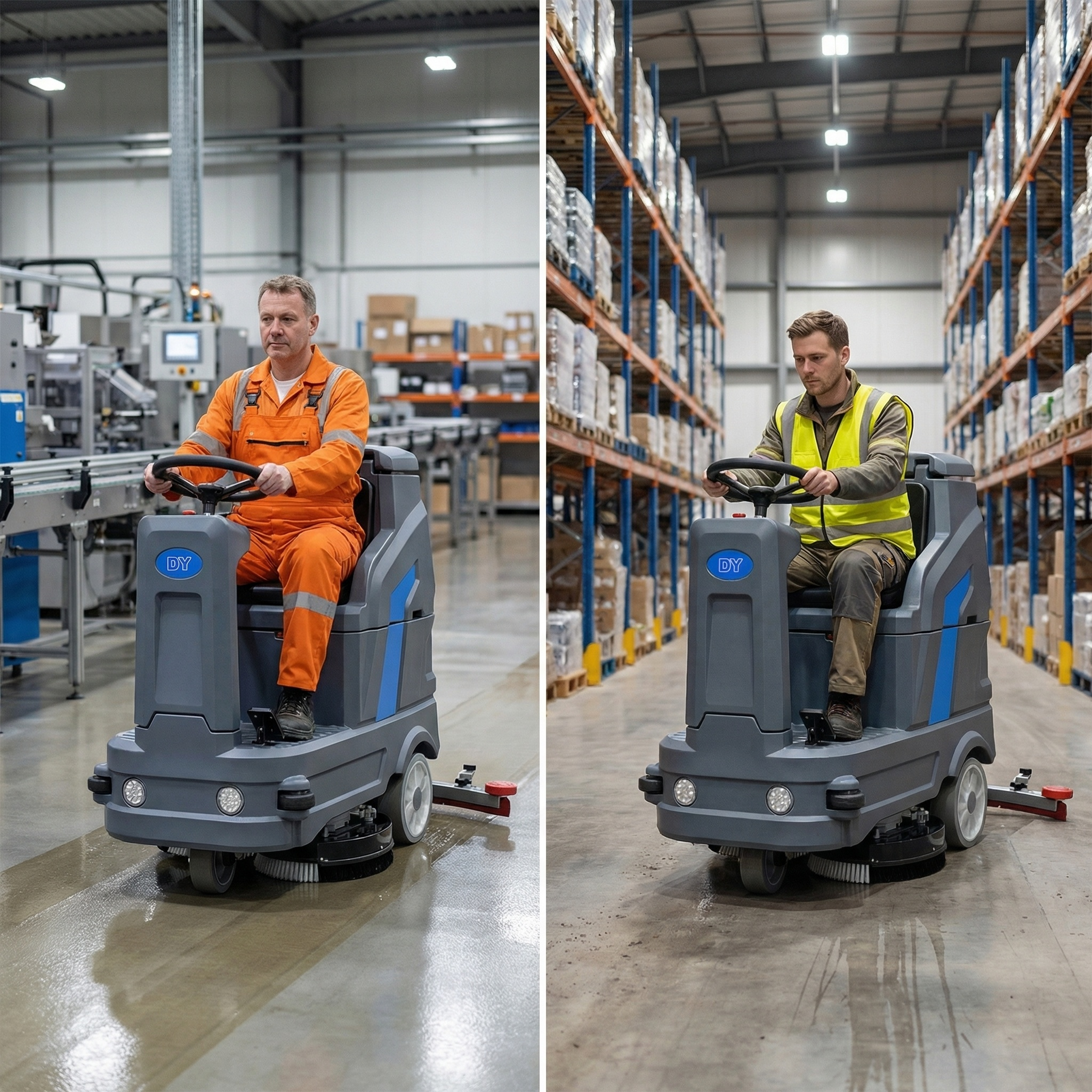
Mechanical cleaning systems—walk-behind scrubbers, ride-on sweepers, and auto-scrubbers—transform industrial floor maintenance from labor-intensive chore to precision operation. When paired with compatible low-foaming, equipment-safe cleaners, these machines deliver uniform solution application, mechanical agitation, and complete soil recovery in a single pass. Field data shows this integration reduces labor time by over 50% versus manual mopping or pressure washing.
Key efficiency gains include:
- Precise dilution control, cutting chemical waste by up to 30% annually while maintaining consistent coverage across large areas.
- Reduced operator fatigue and exposure to fumes or splashes—supporting both productivity and workplace safety compliance.
- Extended equipment life through use of pump-compatible, non-corrosive formulas that prevent internal residue buildup and valve clogging.
For optimal ROI, select cleaners validated for use with major OEM scrubber systems (e.g., Tennant, Nilfisk, or ICE) and confirm compatibility with your specific machine’s material handling components—especially seals, hoses, and recovery tanks.
FAQ
Why do standard industrial floor cleaners fall short for workshop floors?
Standard cleaners lack the specialized chemistry to address the deep penetration and bonding of hydrocarbons, as well as the embedding of metal particles, which are prevalent in workshop floors.
What are the main contaminants in workshop floors?
Motor oil, machining grease, and fine metal shavings are the primary contaminants that make workshop floors challenging to clean.
How does concrete surface type affect cleaner compatibility?
The concrete surface type—whether it is uncoated screed, epoxy-coated, or polished—determines the ideal pH range for cleaners and their compatibility to prevent damage and ensure effective cleaning.
What role do mechanical cleaning systems play in industrial floor maintenance?
Mechanical cleaning systems significantly improve efficiency by providing uniform solution application and complete soil recovery, thus reducing labor time and exposure risks.
What is the risk of using incompatible industrial floor cleaners?
Incompatible cleaners can lead to reduced cleaning efficacy and increased recoating costs, alongside potential floor damage.
Table of Contents
- Workshop Concrete Floor Challenges: Why Standard Industrial Floor Cleaners Fall Short
- Industrial Floor Cleaner Chemistry: Matching Formulation to Soil Type and Concrete Condition
- Concrete Floor Variants: Selecting an Industrial Floor Cleaner by Surface Type
- Application Efficiency: Integrating Industrial Floor Cleaner Use with Mechanical Cleaning Systems
-
FAQ
- Why do standard industrial floor cleaners fall short for workshop floors?
- What are the main contaminants in workshop floors?
- How does concrete surface type affect cleaner compatibility?
- What role do mechanical cleaning systems play in industrial floor maintenance?
- What is the risk of using incompatible industrial floor cleaners?