 EN
EN

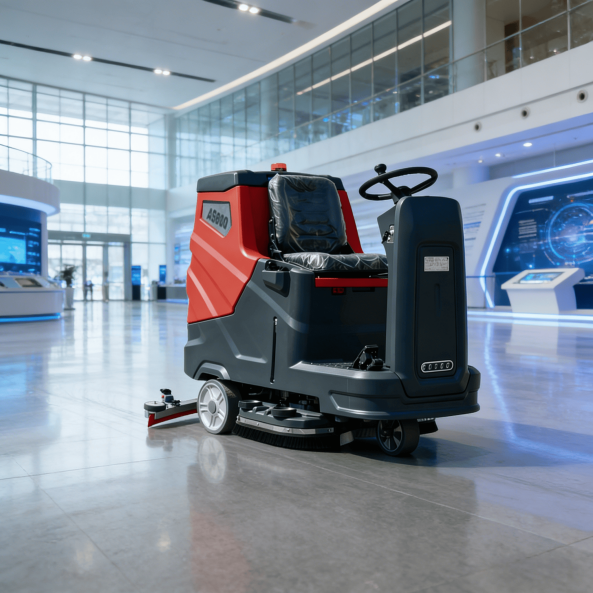
Assess Facility-Specific Requirements for Optimal Floor Scrubber Selection
Square footage and layout complexity: Why 30,000+ sq ft demands ride-on floor scrubber scalability
For spaces larger than 30,000 square feet, industrial ride-on floor scrubbers are pretty much essential if cleaning efficiency matters at all. Big box stores and similar warehouses really see the value in these machines since they can tackle anywhere between 20,000 to 30,000 square feet each hour. That cuts down on labor time by around two thirds when compared to the old walk behind models most places still use. Things get trickier for facilities with complicated layouts though. Warehouses that have lots of different sections, mezzanine levels, or weird shaped areas often need scrubbers equipped with modular tanks so workers don't have to stop halfway through their shifts to refill them. According to a recent logistics report from 2023, warehouses bigger than 50,000 square feet saw cleaning operations finish almost half a day quicker when switching to ride on scrubbers instead of sticking with walk behind equipment.
Cleaning path width, solution tank capacity, and recovery tank volume: Balancing coverage speed with refill frequency
Select scrubbers with 30–36 inch cleaning paths to maximize coverage while preserving aisle accessibility. Tank capacities must scale with facility size:
| Facility Size | Solution Tank | Recovery Tank | Coverage per Fill |
|---|---|---|---|
| <20,000 sq ft | 30–40 gal | 35–45 gal | 15,000–18,000 sq ft |
| 20,000–50,000 sq ft | 50–65 gal | 55–70 gal | 25,000–35,000 sq ft |
| >50,000 sq ft | 70+ gal | 75+ gal | 40,000+ sq ft |
In 30,000 sq ft facilities, machines with under 40-gallon tanks require three or more refills per shift—increasing labor costs by 18%.
Maneuverability constraints: Turning radius, obstacle navigation, and aisle-width compatibility in industrial warehouses
When looking at scrubber options for tight spaces, focus on models that can turn within 60 inches and have built-in sensors to spot obstacles in narrow warehouse aisles. For standard 96 inch wide aisles, most facilities find success with machines no wider than 48 inches that either articulate or offer zero turn steering capabilities. Warehouses with loading docks or ramps should definitely check if the equipment can handle slopes of around 5 degrees minimum. According to industry reports, when scrubbers don't fit properly in their designated space, it actually accounts for roughly a quarter of all lost productivity during those critical floor cleaning times across manufacturing and distribution centers nationwide.
Maximize Uptime and Productivity with Runtime, Coverage, and Charging Efficiency
Battery runtime (4–6 hours per shift) and fast-charge capability for uninterrupted floor scrubber operation
Getting the most out of industrial cleaning really comes down to keeping things running nonstop. Modern scrubber machines that last around four to six hours each shift mean workers don't have to stop what they're doing just because the battery runs out. The fast charging tech these days can get up to 80% power in less than two hours flat, so facilities can run multiple shifts back to back without needing extra machines sitting around unused. Most lithium ion batteries will handle over two thousand charge cycles according to the latest industry reports from 2024, which means longer lasting equipment overall. Some models come equipped with temperature control systems that keep them working reliably even when charged quickly. This makes all the difference during those busy times in warehouses when downtime is costly. Facilities using this kind of tech report saving about 30% on labor expenses compared to older methods too.
Real-world coverage rate (sq ft/hr) benchmarks aligned to warehouse size and shift schedules
Coverage rates determine whether cleaning can be completed within non-operational windows—especially vital for large-scale facilities. Warehouses exceeding 100,000 sq ft require scrubbers achieving 30,000–50,000 sq ft/hour. Key performance influencers include:
- Path width: 30-inch models cover 25% more area per pass than 24-inch equivalents
- Shift alignment: 24/7 operations need units capable of cleaning 15,000+ sq ft during standard 30-minute shift transitions
- Layout impact: Aisles under 8 ft wide reduce effective coverage by up to 40% without zero-turn capability
Matching tank capacity to coverage targets is essential—e.g., a unit cleaning 40,000 sq ft/hour requires at least a 50-gallon solution tank to avoid refill interruptions and sustain consistent floor cleanliness standards.
Choose Between Ride-On and Walk-Behind Floor Scrubbers Based on Scale and Labor Strategy
For warehouses bigger than around 30 thousand square feet, ride on floor scrubbers really make sense because they let workers cover much larger areas, maybe even twice or thrice as fast compared to those walk behind models. These machines come with cleaning widths ranging from about 20 inches all the way up past 48 inches, plus big tanks holding up to maybe 100 gallons or so which means fewer stops to refill water. The seats are also designed ergonomically, helping reduce tiredness when someone needs to work long hours straight, and this actually saves companies roughly 40 percent on labor costs compared to doing things manually. On the flip side, walk behind scrubbers tend to perform better in tight spots such as narrow aisles under eight feet wide or areas where shelves block movement easily thanks to their smaller size and ability to turn sharply. While these walk behind units cost less initially somewhere between four grand to fifteen thousand dollars instead of eight thousand to twenty five thousand plus for ride ons, they take significantly longer time to clean big spaces, sometimes adding up to an extra quarter to half the time needed. Over five years, this translates into higher overall labor expenses for businesses running large operations. So if the warehouse layout is mostly open space, go with ride ons. But for places that have lots of sections or need supplemental cleaning, walk behinds still hold their ground.
Evaluate Total Cost of Ownership and Industrial Durability for Long-Term ROI
TCO breakdown: Upfront investment, battery replacement cycles, maintenance intervals, and labor cost savings from floor scrubber automation
A comprehensive total cost of ownership (TCO) analysis for industrial floor scrubbers extends beyond the initial purchase price. Key components include:
- Upfront equipment costs versus long-term operational savings
- Battery replacement cycles (typically every 3–5 years)
- Scheduled maintenance for brushes, squeegees, and filtration systems
- Labor cost reductions enabled by automated cleaning efficiency
Warehouses achieve maximum ROI when durable construction minimizes repair frequency and automation slashes manual labor hours. High-quality scrubbers with extended lifespans (7–10 years) offset higher initial investment through:
| Cost Factor | Impact on TCO |
|---|---|
| Labor Savings | Reduces recurring operational expenses |
| Battery Efficiency | Lowers replacement frequency |
| Preventive Maintenance | Decreases downtime costs |
By evaluating all lifetime expenses against measurable productivity gains, facilities secure 20–40% long-term savings compared to manual cleaning methods.
FAQ
What is the importance of selecting the right floor scrubber size for warehouses?
Choosing the right floor scrubber size ensures optimal cleaning efficiency and cost-effectiveness, especially in different facility layouts.
How does battery technology impact cleaning operations?
Advanced battery technologies, such as lithium ion, improve runtime and charging efficiency, minimizing downtime during operations.
Why are ride-on scrubbers preferred for larger facilities?
Ride-on scrubbers offer higher coverage speeds and ergonomic designs, saving on labor costs in extensive spaces.
Table of Contents
-
Assess Facility-Specific Requirements for Optimal Floor Scrubber Selection
- Square footage and layout complexity: Why 30,000+ sq ft demands ride-on floor scrubber scalability
- Cleaning path width, solution tank capacity, and recovery tank volume: Balancing coverage speed with refill frequency
- Maneuverability constraints: Turning radius, obstacle navigation, and aisle-width compatibility in industrial warehouses
- Maximize Uptime and Productivity with Runtime, Coverage, and Charging Efficiency
- Choose Between Ride-On and Walk-Behind Floor Scrubbers Based on Scale and Labor Strategy
- Evaluate Total Cost of Ownership and Industrial Durability for Long-Term ROI