 EN
EN

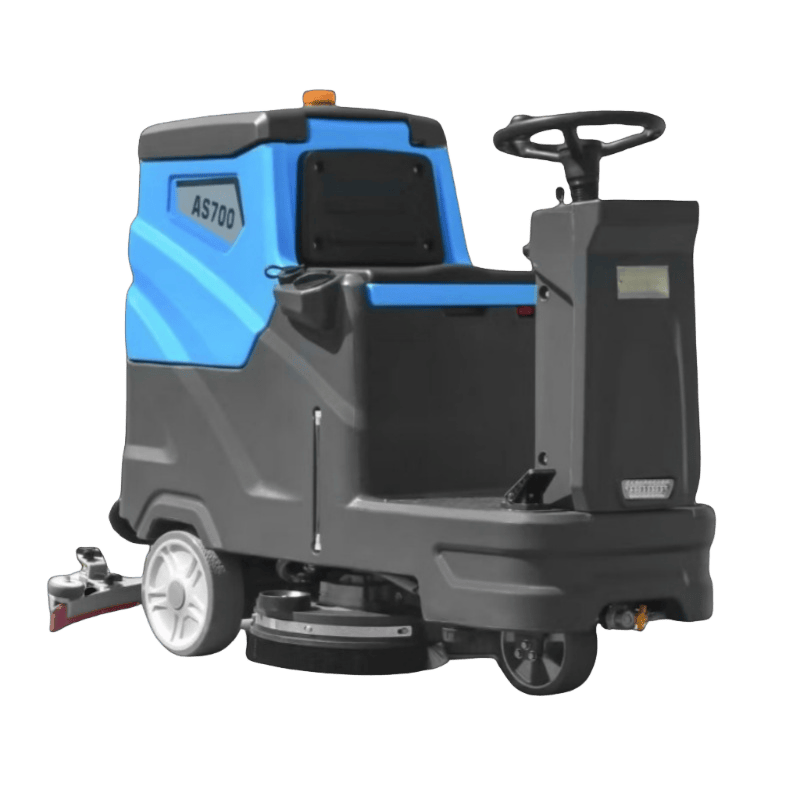
Ride-On Floor Scrubber Machines: The Optimal Choice for Speed and Scale
Why Walk-Behind Units Fall Short Beyond 50,000 Sq Ft
When it comes to facilities larger than around 50,000 square feet, walk behind floor scrubbers just don't cut it anymore because nobody can keep pushing them all day long. Research into worker ergonomics reveals something interesting too: most operators start losing steam pretty quickly. After about 90 minutes straight of pushing these machines, their productivity drops somewhere between 30 and 40 percent. What does this mean practically? Cleaning speeds go from impressive rates of about 20,000 square feet per hour down to barely over 12,000 in those massive warehouse spaces. The narrow path width of these scrubbers (usually 18 to 24 inches wide) means workers have to overlap their passes constantly. And let's not forget about the water tanks either. Most models only hold 15 to 25 gallons at best, so refilling becomes a regular interruption during work. All these factors combined create serious problems for businesses needing fast turnaround times in big industrial settings where maintaining consistent standards across vast areas is absolutely essential.
How Dual-Brush Systems and Ergonomic Design Double Coverage Rate
Dual brush ride on machines really change how cleaning gets done. These machines have cleaning paths between 40 and 45 inches wide so there's no need for overlapping passes. Their counter rotating brushes give full 360 degree scrubbing power that actually lifts deep set dirt right off surfaces during just one pass, and still manages to keep going fast enough to cover ground quickly. Most models run around 4 to 5 miles per hour, which means they can tackle over 50 thousand square feet every hour when working through large spaces. Sitting down instead of walking makes all the difference too. Operators report about half the fatigue issues compared to traditional walk behind units, thanks partly to the comfortable seating and easy to reach controls that don't require awkward stretching or bending. Plus those big 50 to 70 gallon tanks mean fewer stops for refilling water and solution, something that matters a lot in busy warehouses and factory floors where downtime costs money.
| Feature | Walk-Behind Impact | Ride-On Advantage |
|---|---|---|
| Operator Fatigue | 30–40% speed reduction | <5% performance variance |
| Coverage Width | 18–24 inches | 40–45 inches |
| Tank Capacity | 15–25 gallons | 50–70+ gallons |
| Sq Ft/Hr (Sustained) | ≈12,000 (50k+ sq ft) | ≈50,000 (open layouts) |
Coverage Rate (Sq Ft/Hr): The Critical Efficiency Metric for Floor Scrubber Machines
From Theoretical Max to ISO 16691-2–Verified Real-World Performance
When manufacturers talk about their equipment's top coverage rates, they usually mention numbers over 50,000 square feet per hour. But let's face it, these figures rarely match what happens on the floor. Testing done according to ISO 16691-2 standards reveals that real world results tend to be around 25 to 40 percent below those impressive specs. Why? Well, there are all sorts of factors that can't be controlled in practice such as when operators need to make turns, deal with obstacles getting in the way, or simply have to leave extra space between passes. Take one particular model that was advertised at 60,000 sq ft/hr. In actual tests conducted in warehouses last year, it only managed an average of 42,000 sq ft/hr according to the latest Material Handling Benchmark report from 2024. The difference between marketing claims and reality explains why big facilities should really focus on metrics that have been checked by independent sources instead of relying solely on those tempting maximum numbers companies love to throw around.
Matching Coverage Rate to Facility Layout: Linear, Obstructed, and Multi-Zone Scenarios
Effective deployment hinges on aligning machine capability with spatial reality. Coverage rates shift significantly based on layout complexity:
| Facility Type | Layout Characteristics | Achievable Coverage Rate |
|---|---|---|
| Linear Warehouses | Wide aisles, minimal obstructions | 45,000–55,000 sq ft/hr |
| Retail/Obstructed Spaces | Frequent fixtures, narrow paths | 22,000–30,000 sq ft/hr |
| Multi-Zone Facilities | Separate rooms, security checkpoints | 15,000–25,000 sq ft/hr |
In multi-zone environments, autonomous routing systems can increase throughput by 35% over manual operation. To maintain consistent cleaning quality across surface transitions—such as polished concrete to epoxy-coated floors—prioritize machines with adjustable brush pressure and precision solution flow control.
Battery Runtime and Tank Capacity: Eliminating Hidden Bottlenecks in Large-Area Cleaning
Beyond the Spec Sheet: Why Actual Runtime Is Often 30–40% Lower Than Advertised
Most battery runtime numbers don't match what happens on the job site. A bunch of facility managers ran their own tests last year and found that real world performance drops by around 30 to 40 percent compared to what manufacturers promise. Why? Well, it depends on all sorts of things like rough surfaces, thick cleaning solutions, and how skilled the person actually is with the equipment. Take concrete floors for instance. Those old, pitted ones suck down about 25% more power than shiny new ones. When companies manage big buildings, these kinds of differences mean unexpected stoppages and messed up schedules. Facility staff should always check battery life through proper field testing standards like ISO 16691-2 instead of relying solely on laboratory results from the factory.
How 50–70+ Gallon Solution Tanks Reduce Refills and Maintain Workflow Continuity
Bigger solution tanks tackle workflow fragmentation head on. Take a look at the math: a standard 60 gallon tank covers around 18,000 square feet between refills, which is twice what smaller 30 gallon units manage at their max 9,000 sq ft capacity. That cuts down refill stops by half across most job sites. Facilities larger than 100k sq ft face serious productivity hits when refilling happens every few hours. We're talking about losing anywhere from 15 to 20 minutes per stop, plus all the downtime while workers wait for fresh solution. The bigger tanks keep solutions flowing throughout entire cleaning cycles so chemicals get applied evenly and scrubbing stays consistent. When planning for continuous operation, it pays to match tank size with battery life. Pairing a 70 gallon reservoir with a battery good for five straight hours makes sense for big spaces such as airports or warehouse complexes where stopping midway through a job simply isn't an option.
FAQ
Why are ride-on scrubbers better for large facilities?
Ride-on scrubbers cover larger areas much faster due to their wider cleaning paths and larger tank capacities, reducing the need for frequent refills or fatigue-associated slowdowns.
What layout types affect coverage rate the most?
Complex layouts with obstructions, such as retail spaces or multi-zone facilities, can significantly slow down coverage rates compared to wide aisle, linear designs.
Are manufacturer specs for scrubbers always accurate?
No, real-world performance often falls short of advertised specs due to various factors like layout, floor type, and operator technique.